





Myopia
What is Myopia?
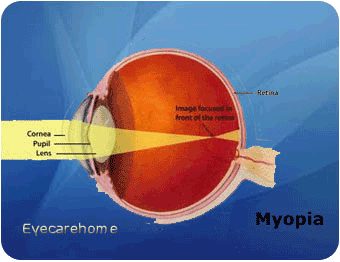
Myopia or nearsightedness is a refractive error which means that the eye does not bend or refract light properly to a single focus to see images clearly. In myopia close objects look clear but distant objects appear blurred. Myopia is a common condition that affects many people in the world. It is an eye focusing disorder and not an eye disease.
Myopia is inherited and is often discovered in children when they are between ages 8 and 12 years old. During the teenage years, when the body grows rapidly, myopia may become worse. Between the ages of 20 and 40, there is usually little change. Myopia can also occur in adults.
If the myopia is mild, it is called low myopia. Severe myopia is known as high myopia. High myopia will usually stabilize between the ages of 20-30 years old. With high myopia, you can usually correct vision easily with glasses, contact lenses or sometimes with refractive surgery.
Patients with myopia have a higher risk of developing a detached retina. Ask your ophthalmologist to discuss the warning signs of retinal detachment with you if you are in this risk category. If the retina does detach and it is discovered early enough, a surgical procedure can usually repair it. It is important to have regular eye examinations by an ophthalmologist to watch for changes in the retina that might lead to retinal detachment.
People with high myopia may also have a higher than average risk of developing glaucoma and cataracts.
Causes
Myopia occurs when the eye is longer than normal or has a cornea (clear front window of the eye) that is too steep. As a result, light rays focus in front of the retina instead of on it. This allows you to see near objects clearly, but distant objects will appear blurred.
Symptoms
Some of the signs and symptoms of myopia include eyestrain, headaches, squinting to see properly and difficulty seeing objects far away, such as road signs or a blackboard at school.


follow us
